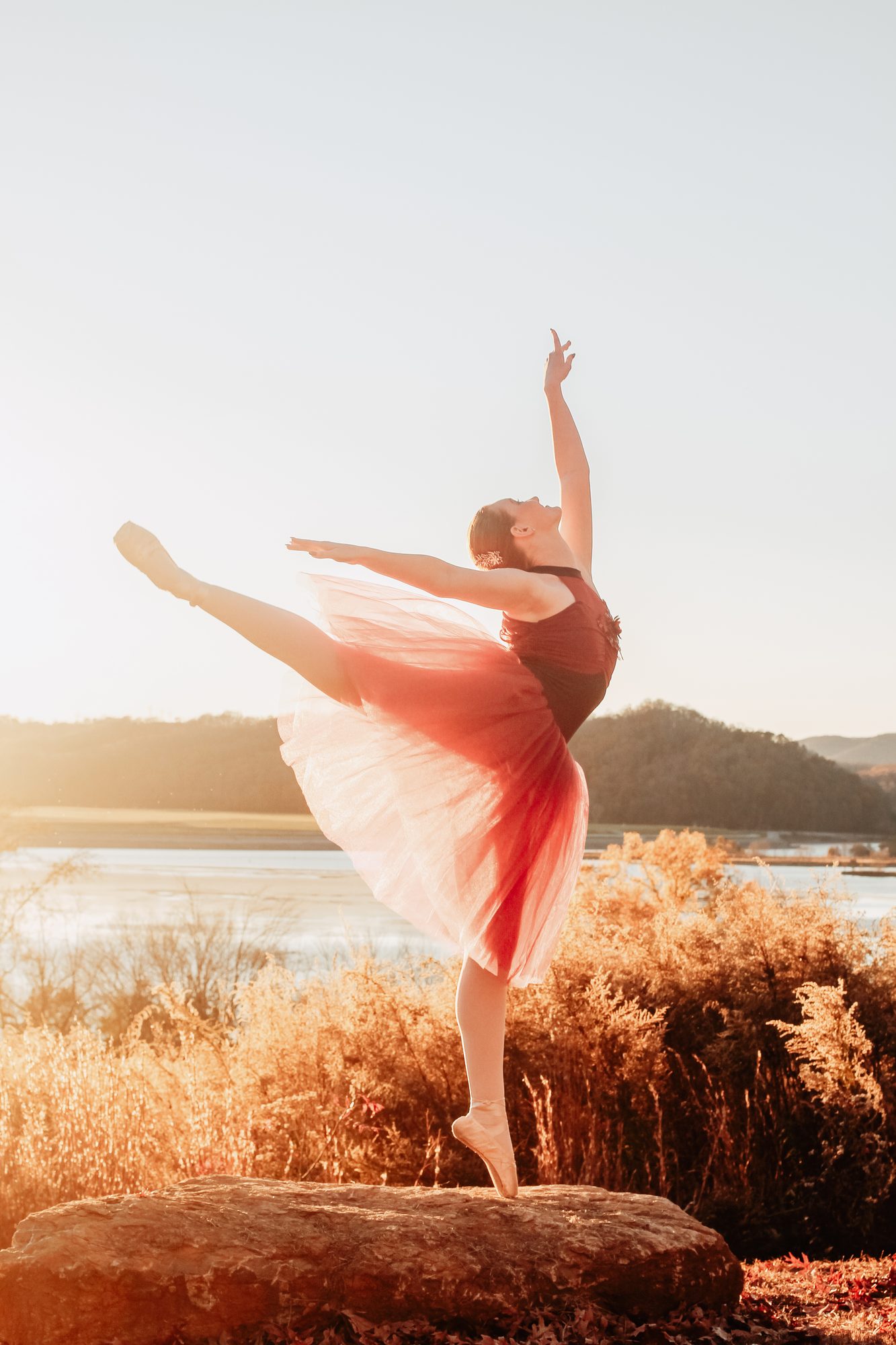
Christen McCuiston taught ballet for twenty-one years before she opened a studio of her own, and by the time we worked together she was carrying every part of it. Director, teacher, and everything else that comes with running a brand new studio. She already had a look she loved and she had known it for a while. It just lived in pieces, in the paint she had chosen and the wallpaper accents and the recital costumes, and none of it had ever been photographed as one thing.
She could already describe exactly what she wanted out of this shoot. Frolicking in a field, bathed in sunlight. Dancing through the wildflowers. Worshiping God with light and movement. That was the whole direction, and it is still the best one anybody has handed me.
And she asked for no faces
At the time there were no plans for a new website. Christen wanted these printed and hung on the walls of the studio and she wanted them to still be hanging there in years, and that was the whole job. When it did come time to rebuild the site, they turned out to be the perfect thing to build it around, and they carry that site now.
Art is expensive, and a brand new studio has a lot of blank wall and not much to put on it. Filling that wall properly is its own line in a budget that has already been spent on floors and mirror walls and the studio build out. Custom photographs of her own dancers, in her own colors, on her own terms, solved a wall problem and a brand problem in the same afternoon.
But long term wall art carries a rule that a marketing shoot does not, and the rule is that the dancers had to be unidentifiable. Seniors graduate. Families move away. A face on a wall quietly dates the room it is hanging in, and sooner or later it belongs to somebody who is not there anymore, and the parents walking past it every week know it. These had to be timeless. Still right in five years, and in ten.
So, no faces. Figures in light rather than portraits of children.
Frolicking in a field, bathed in sunlight.
Where we shot it
We shot it here, on my own property, on a ridgeline in Harriman with the mountains and the lake sitting behind us. That view is the entire reason to shoot on this ground and it is also the problem with it, because the land drops away from the ridge and slopes downward to a semi flat spot, which means the ground is doing something different underfoot at every single position you try. Finding a clean angle out here takes a lot more walking than it looks like it should from the photographs.
We get beautiful sunsets on this ridge year round, though, and that is the real asset. It is why I keep bringing work back here, because I am in love with this view.
Thirty-six minutes
This was early November. Golden hour opens around five past five and the sun is gone behind the ridge by twenty to six, which gives you about thirty-six minutes of the light you actually came for, and then another twenty-five or so of afterglow that is lovely and completely different and cannot be used for the same shots. You do not get to run late on a session like this, and there is no version of the day where you make the light wait for you.
So we started at the bottom of the property, because that is where I lose the light first. The ridge above it takes the sun early and the low ground goes flat while everything above it is still glowing. It is also the tighter frame down there, with more of the natural grasses coming up into it, so it earns its place in the set while the light is still doing something worth having.
Then we moved up top for the perspective shots, where the mountains and the lake come in behind the dancers and the ridge is still holding light that had already left the low ground twenty minutes earlier. On a shoot like this the running order is not a preference or a nice way to organize the afternoon. It is the whole plan, and getting it backwards would have cost us half the session.
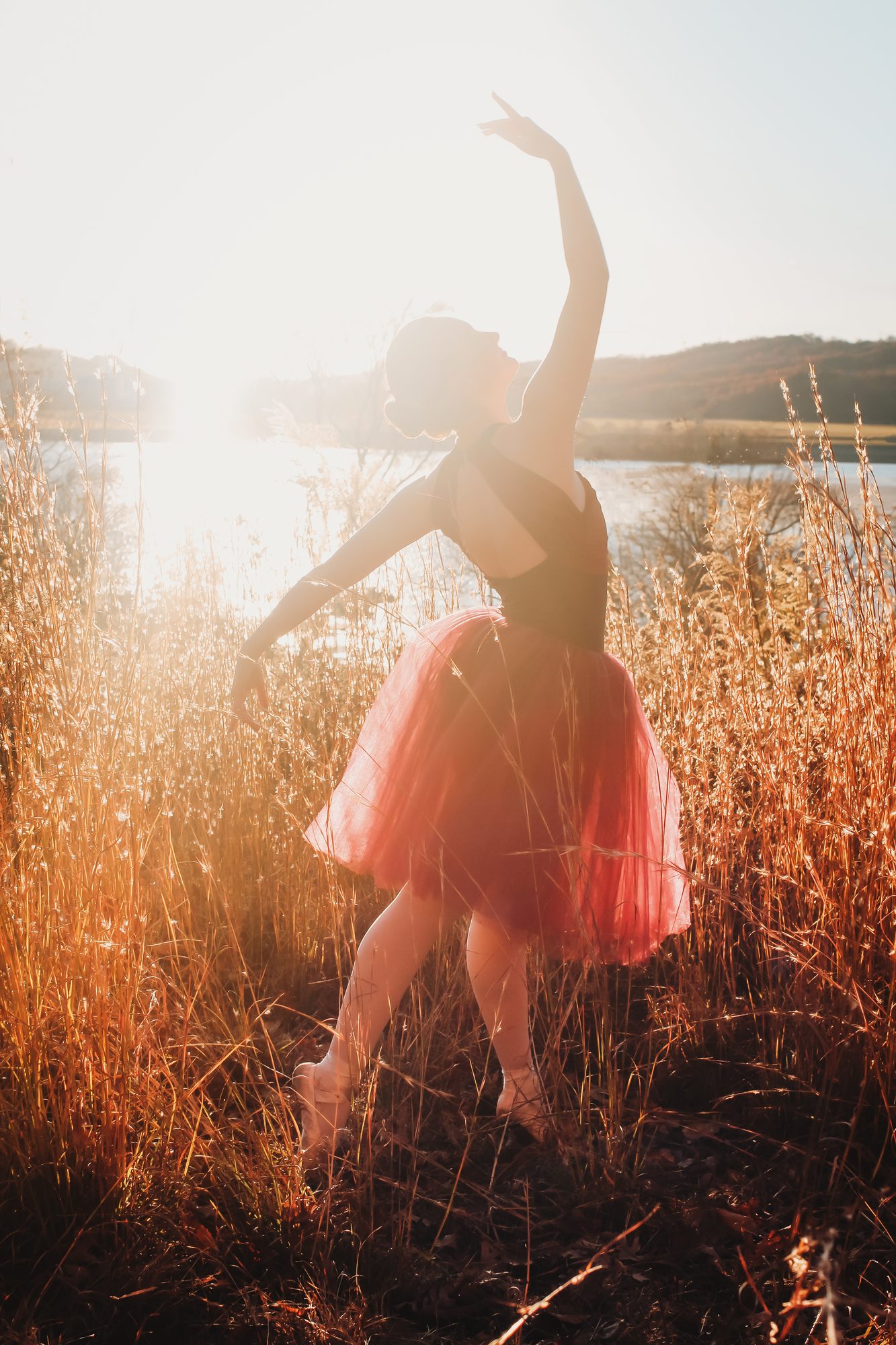
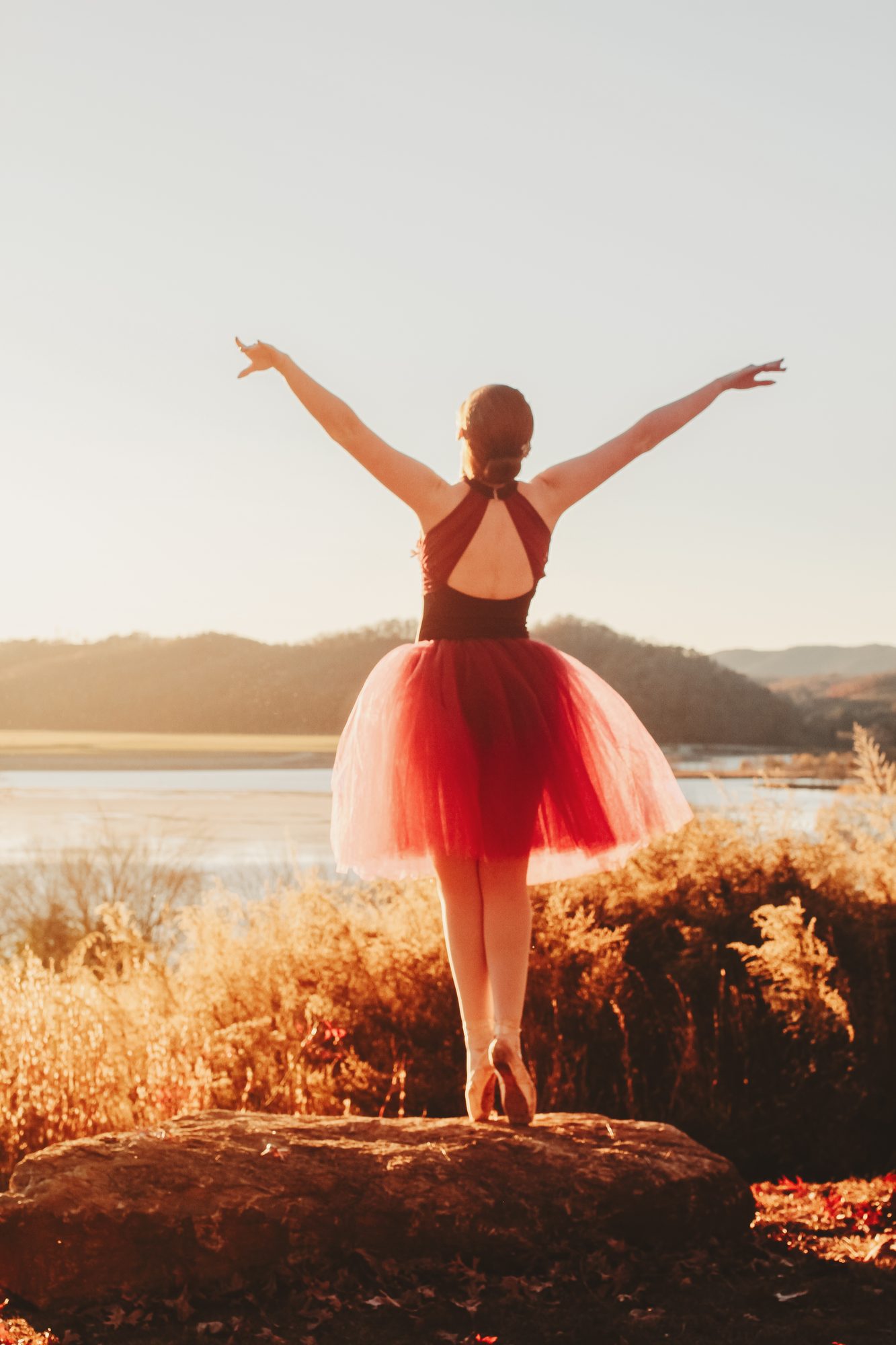
Low ground first, while the light was still there. The ridge holds it longer.
Six dancers, and the director directing
We had six girls out there. Two of the studio's seniors, two of Christen's nieces, and my two youngest as the littlest dancers. They wore past recital costumes, pulled and matched to Christen's taste and the beginnings of her color palette rather than to whatever show they were originally made for, and that is how this set of images came together.
Two of the parents came along, and we all spent the evening oohing and aahing every time one of the girls hit a pose right as the light came through. It was a genuinely lovely way to spend an hour.
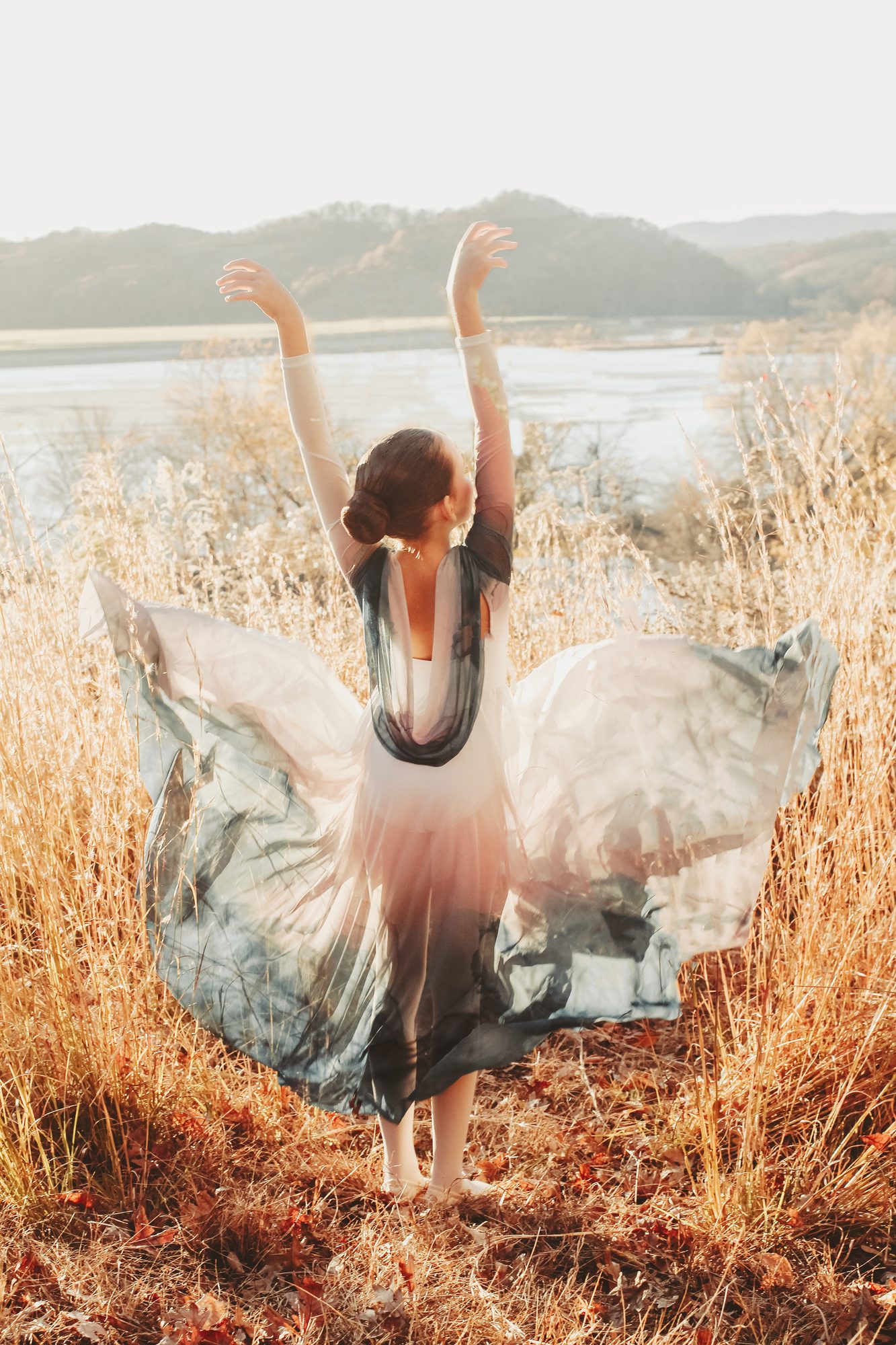
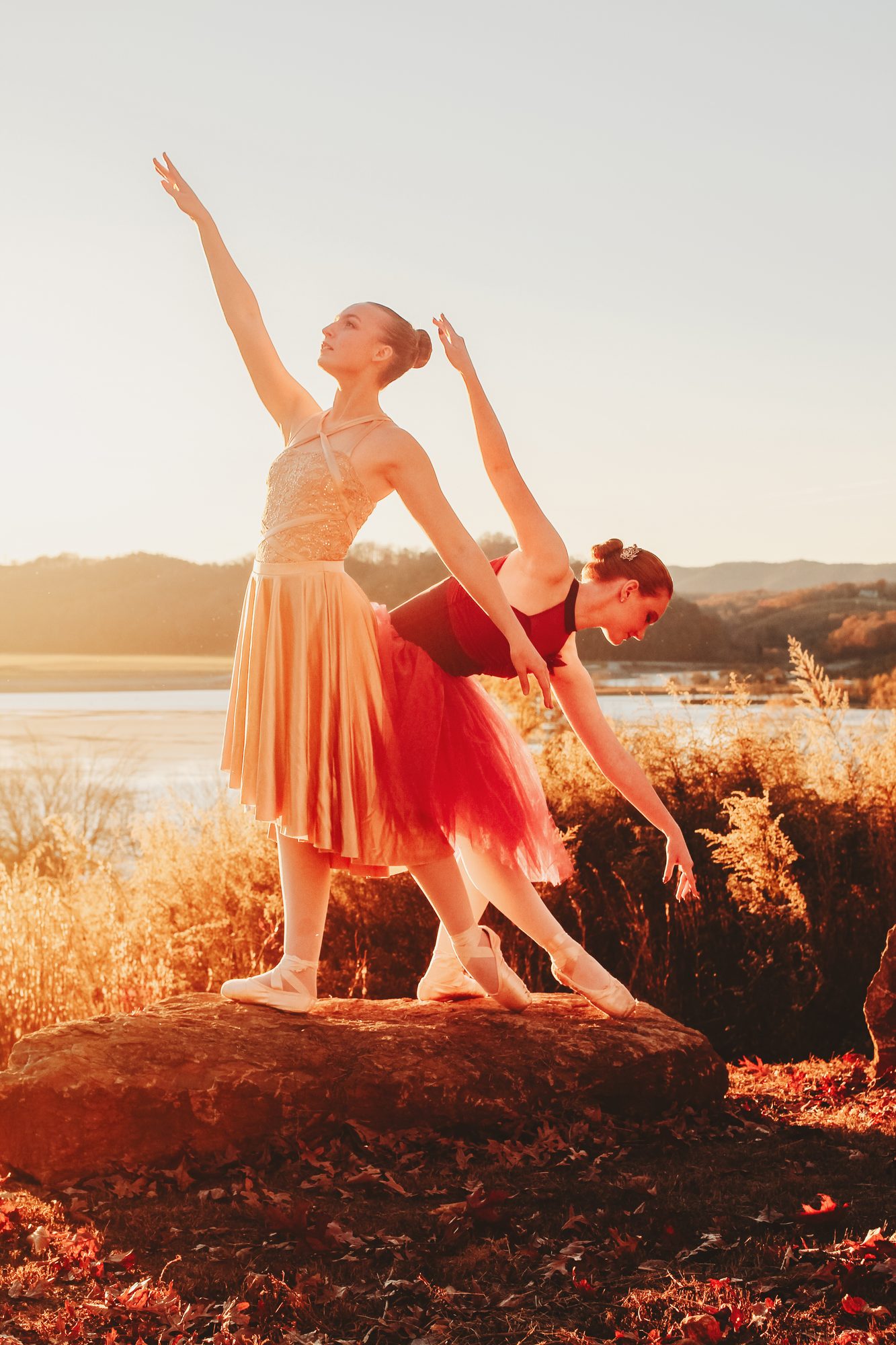
Past recital costumes, matched to Christen's taste rather than to whatever show they were made for.
And here is the part I would repeat on every dance shoot I ever do again. I let Christen lead the posing.
She has taught ballet for twenty-one years and she can look at a line that is nearly right and name the exact thing that needs to move. I can build a frame and read light and I know what will hold up printed at forty inches, but I cannot tell a senior that her arm is sitting two degrees off from where it belongs. So she called the poses and gave the girls specific corrections and I shot them, and the positions in those photographs are correct in a way I could not have gotten to on my own with any amount of time.
Hire a photographer for the photography. If you know your own craft better than they do, get in there and direct it, with their permission.
The frame that is not technically perfect
There is one shot from that evening. One of the seniors mid air over a rock, and I genuinely could not tell you what the move is called. Compositionally it is the one. The rock, the line of her body, the light coming through from behind, all of it landing at once in a frame I did not plan and could not repeat.
It is also not sharp the way a jump is supposed to be sharp. I was shooting a 40mm on a crop sensor, which is not a fast lens, and my settings were built for what she asked for, which was soft and slow and ethereal with their identities hidden. Slow does not freeze a girl in the air. I could have shot it for sharpness and I would have lost the exact quality the entire session existed to produce, and then I would have handed Christen a technically clean photograph of the wrong thing.
I love it anyway. Christen loves it. It is going on a wall.
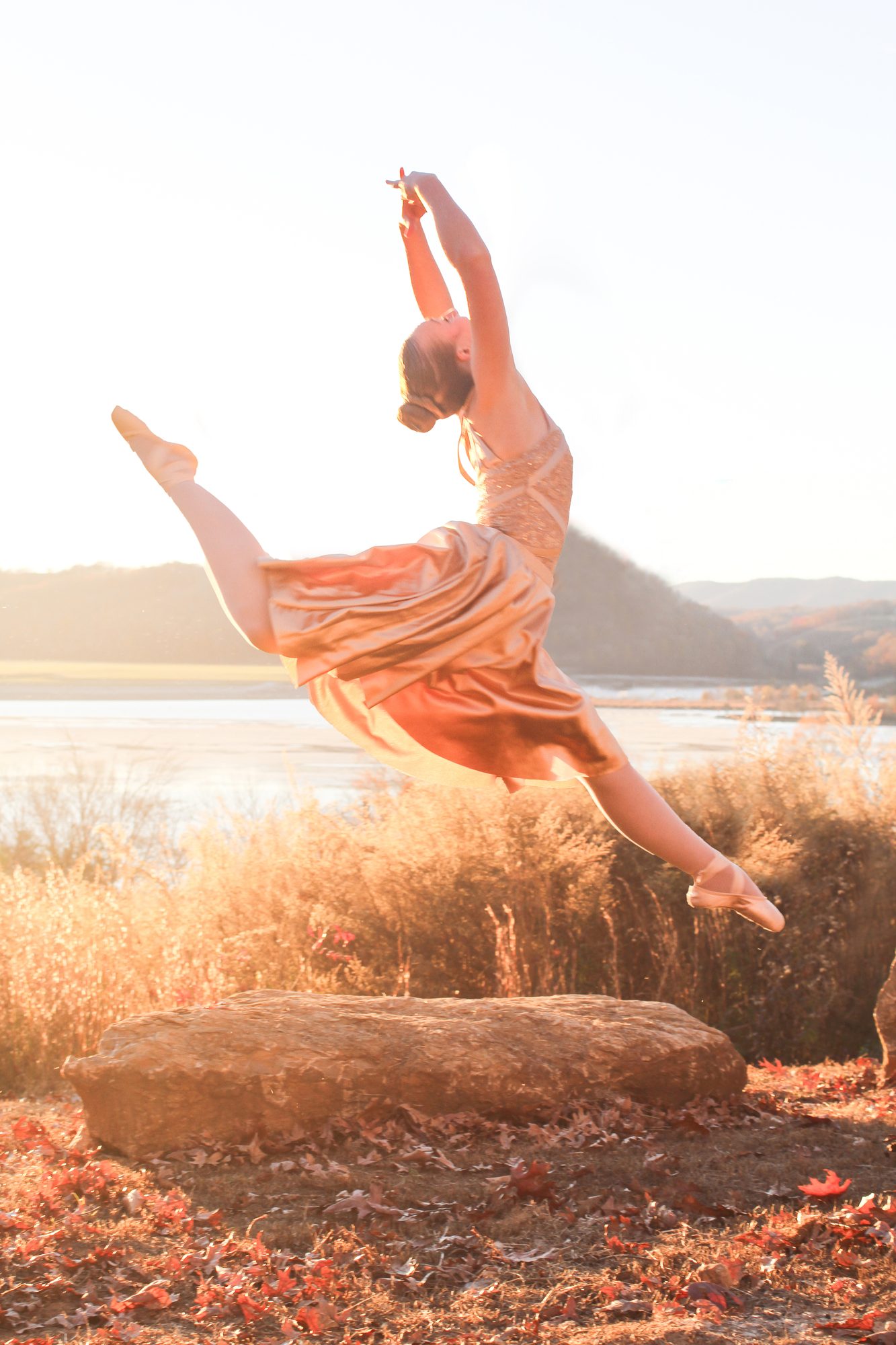
A sharp photograph of the wrong thing is still a photograph of the wrong thing.
The palette came out of the photographs
Sanctuary's colors were not pulled out of a swatch library, and they did not come from me sitting with a color wheel deciding what a ballet studio ought to look like.
Christen was already gravitating that direction inside the studio itself, in the walls and the wallpaper and a hundred small choices she had made in the space without ever writing them down as a system. What this session did was settle it. Once the photographs came back, the cream and the dusty rose and the warm gold of that particular light were all sitting right there in the images, and a leaning turned into a brand. That only happens when the shoot is planned with the brand in mind, instead of booked afterwards to fill a website that is already built.
If you are booking a brand shoot
Decide what the pictures are actually for before you decide what anybody is going to wear.
Christen knew. Frolicking in a field, bathed in sunlight, and the faces stay out of it because this is going on the wall for years. That is two sentences, and every single decision after them got easier. What we shot first. What I shot it with. What we chased and what we let go. What I was willing to accept as imperfect and what I was not.
Most people book a shoot and hope. The ones who walk away with images they are still using years later are the ones who came in knowing what they wanted.
You can see how these ended up being used on the Sanctuary Dance Academy project page, and the rest of the galleries live over at Traveling Wave Photography.
Building something the photos have to carry?
Tell me what the images need to do, and I will tell you what the session should look like.
Start the conversationBrand photography by Samantha Alsmo for Traveling Wave Design Co. Read the full Sanctuary Dance Academy case study.